Running along the slopes between Costa Rica’s high mountains and the Caribbean lowlands lies one of Central America’s most rewarding birding habitats: the Caribbean foothills of Costa Rica.
This narrow, highly biodiverse elevation zone, typically between 400 and 1,200 meters (1,300–4,000 feet), brings together species from the lowlands and the mountains, alongside birds that are particularly associated with foothill forests. For birdwatchers and wildlife photographers visiting Costa Rica, it offers opportunities to find rare, range-restricted, and highly sought-after species.
In this guide, we explore some of the most interesting birds of Costa Rica’s Caribbean foothills, the habitats and feeding behaviors that can help you find them, and the best places to look for them. We also explain how experienced local birding guides can improve your chances of observing some of the region’s most elusive species.
Why Is the Caribbean Foothill Habitat So Special?
The Caribbean slope of Costa Rica receives abundant moisture from trade winds blowing in from the Caribbean Sea. This creates a humid environment where evergreen forests, fruiting trees, and dense understory vegetation support an extraordinary diversity of birds.
Elevation is particularly important. As the land rises from the Caribbean lowlands toward the mountains, temperature, vegetation, and food availability change. Different bird communities occupy different elevations, while some species move up and down the slopes in response to seasonal changes in food availability.
For birders, this means that relatively small changes in elevation can make a significant difference in which species are present.
The foothills are especially interesting for species associated with particular forest types, fruiting trees, and feeding opportunities. Some are widespread but difficult to observe; others have relatively restricted distributions, making Costa Rica an important destination for birdwatchers hoping to see them.
The Specialist Birds of the Caribbean Foothills
Fruit-Eating Specialists
Fruit is an important resource for many tropical forest birds, and knowing which trees are producing fruit can make a real difference when searching for particular species.
Tanager Flocks at Fruiting Trees
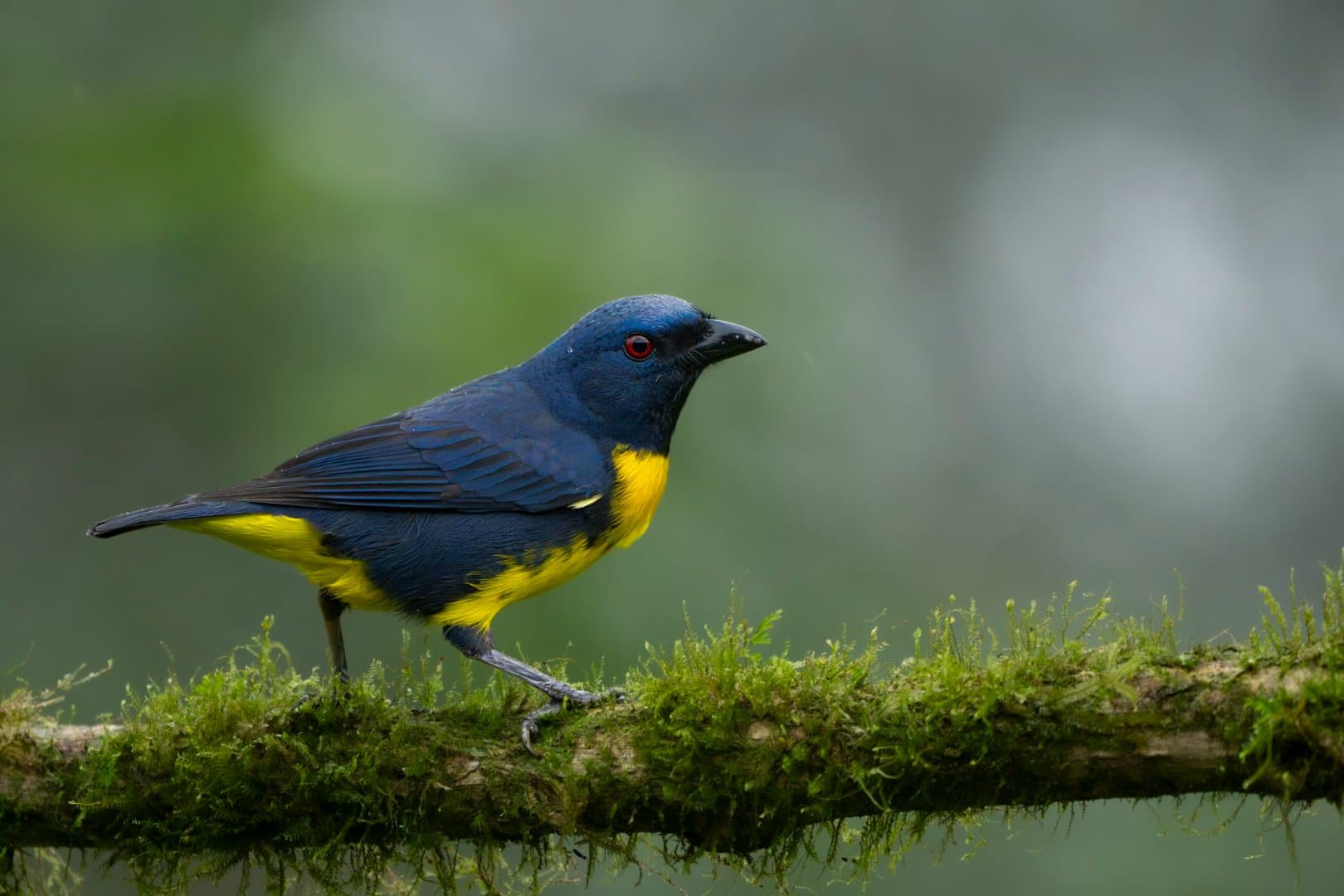
Small fruits, including those produced by trees in the Melastomataceae family, attract a variety of fruit-eating birds. These include tanagers such as the Rufous-winged Tanager, Black-and-yellow Tanager, and Blue-and-gold Tanager.
Observing fruiting trees is often more productive than searching randomly through the forest. When food is abundant, several species may visit the same tree, sometimes providing excellent opportunities for observation and photography.
The Tawny-capped Euphonia is another interesting fruit-eating species. Its diet includes small fruits from several plant groups, including Melastomataceae, mistletoes (Loranthaceae), and plants in the pepper family (Piperaceae).
Compared with some of the region's more elusive forest birds, the Tawny-capped Euphonia can be relatively approachable. It sometimes visits gardens and open areas near forest, making it a rewarding species to look for around suitable birding lodges and rural properties.
Toucans and Fruiting Palms
Fruiting palms can also attract toucans and other fruit-eating birds. One species worth looking for is the Yellow-eared Toucanet, an attractive and relatively elusive member of the toucan family.
The fruits of certain palms, including Euterpe precatoria, may provide an important food source for this species. However, fruit availability varies with location and season, so finding productive trees is often a matter of knowing the area and checking the right places at the right time.
Wild Avocados and Seasonal Bird Movements
Wild avocados are another important food source for several tropical forest birds. Different species of wild avocado produce fruit at different elevations and times of the year, creating a shifting supply of food along the mountain slopes.
This seasonal availability can influence the movements of fruit-eating birds, including the Lattice-tailed Trogon, the Three-wattled Bellbird, and the endangered Bare-necked Umbrellabird.
For birdwatchers, this relationship between fruiting trees and bird movements is particularly interesting. A location that is productive at one time of year may be much quieter at another, while a nearby elevation may offer better opportunities when fruit becomes available there.
Local guides who monitor seasonal fruiting patterns can help visitors identify promising locations and improve their chances of finding these specialized birds.
Secretive Understory Birds: The Black-crowned Antpitta
The Black-crowned Antpitta, also known as the Black-crowned Pittasoma (Pittasoma michleri), is one of the most intriguing birds to look for in the Caribbean foothills.
Despite its common name, it is not a true antpitta. It belongs to the gnateater family, Conopophagidae, whereas true antpittas belong to the family Grallariidae.
The resemblance is understandable. Like many antpittas, the Black-crowned Antpitta has strong legs and spends much of its time close to the forest floor, moving through dense vegetation in search of food.
Its secretive behavior makes it a challenging bird to observe. Even when it is nearby, thick understory vegetation can make it difficult to see. Its distinctive songs and calls may help birders locate it, but obtaining a clear view often requires patience and a good understanding of its habitat.
The species can be difficult to find reliably, and reports from individual locations may vary over time. One place worth investigating in Costa Rica is Hitoy Cerere Biological Reserve, where you may have good chances of observing this species.
The Rufous-vented Ground-Cuckoo: A Specialist of Army-Ant Swarms
For many experienced birdwatchers, the Rufous-vented Ground-Cuckoo (Neomorphus geoffroyi) is one of the most exciting birds to encounter in the Neotropics.
This large, elusive cuckoo inhabits mature tropical forests in Central and South America. It is particularly associated with army-ant swarms, which can provide exceptional feeding opportunities for birds that follow them.
Army ants move through the forest in large groups, flushing insects, spiders, and other small animals from the leaf litter and surrounding vegetation. Several bird species take advantage of this activity, gathering around the advancing ants to capture prey escaping their path.
Antbirds are among the best-known followers of army-ant swarms. With luck, birders may also encounter the Rufous-vented Ground-Cuckoo, a much less frequently observed participant in this remarkable feeding event.
Finding an active swarm is only part of the challenge. The ants may move through dense forest, and the birds attending them can be difficult to observe. Recognizing the signs of a swarm, knowing where to look, and understanding the behavior of the birds can all improve the chances of a sighting.
The La Tigra area offers an interesting opportunity to search for this species with experienced local guides. In some cases, guides have developed the patience and field skills needed to follow army-ant activity and observe ground-cuckoos at relatively close range.
For a closer look at this remarkable species, its behavior, and the incredible work involved in finding it, watch our dedicated BirdnWild video about the Rufous-vented Ground-Cuckoo:
Range-Restricted Hummingbirds
The Caribbean foothills are also rewarding for hummingbird enthusiasts. Several species have relatively restricted distributions in Central America, making them particularly interesting targets for visiting birdwatchers and photographers.
Among the species to look for are the Snowcap, White-bellied Mountain-gem, Black-bellied Hummingbird, and Black-crested Coquette. The Black-crested Coquette also occurs on the Pacific slope, but suitable locations on the Caribbean side can offer particularly good opportunities to observe it.
One of the best strategies for finding these hummingbirds is to visit gardens and open areas near the forest edge, especially where flowering plants provide a reliable source of nectar. Plants in the genus Stachytarpheta, commonly known as porterweeds, can be particularly attractive to hummingbirds.
These open areas can offer much better viewing conditions than dense forest, making it easier to identify birds and photograph their feeding behavior.
Where to Go Birdwatching in Costa Rica's Caribbean Foothills
Costa Rica's Caribbean foothills encompass a broad region rather than a single birding destination. The best place to visit depends on which species you hope to see, the time of year, and how much time you have available.
Here are several areas worth considering when planning a birdwatching trip.
La TigraThe La Tigra area is less familiar to many international birdwatchers than Costa Rica's best-known destinations, yet it offers excellent opportunities to explore foothill habitats and search for specialized forest birds.
For birders interested in elusive species, including the Rufous-vented Ground-Cuckoo, exploring this area with a knowledgeable local guide can be especially worthwhile.
Explore birdwatching tours in La Tigra
Cartago and the Surrounding HighlandsThe Cartago area provides access to a variety of forested habitats in Costa Rica's central region. Depending on the precise location and elevation, birders can explore different communities of foothill and mountain birds.
Although not all sites around Cartago fall within the Caribbean foothills proper, the region can be a useful addition to a broader birding itinerary, particularly for visitors hoping to explore several elevations and habitats.
Explore birdwatching tours in Cartago
La Fortuna and the Arenal RegionLa Fortuna and the surrounding Arenal region are popular stops on Costa Rica birding itineraries. The area offers access to a variety of habitats, from lowland forests to foothill environments and forested slopes.
This diversity makes it a useful base for birders who want to combine a search for specialized forest birds with a broader introduction to Costa Rica's wildlife.
The species you encounter will depend on the particular sites you visit, their elevations, and the time of year. A local guide can help you prioritize locations according to your target species.
Explore birdwatching tours in La Fortuna
Quebrada González, Braulio Carrillo National ParkQuebrada González is a useful option for visitors seeking an accessible forest birding experience along Costa Rica's Caribbean slope.
Located within Braulio Carrillo National Park, the sector offers humid forest and a marked trail through excellent bird habitat. The trail makes it possible to explore the forest on foot without needing to venture into remote terrain.
It can be a good choice for independent birdwatchers who prefer to explore at their own pace, although a local guide may still help with identifying calls and locating difficult species.
Hitoy Cerere Biological ReserveFor birders interested in less-visited forest habitats, Hitoy Cerere Biological Reserve is another area worth considering.
Located in southeastern Costa Rica, this reserve protects humid tropical forest and supports a variety of specialized bird species. It is also a location worth investigating for the Black-crowned Antpitta.
The reserve is relatively remote, and access can be challenging depending on road conditions. A suitable vehicle and advance planning are advisable; check current access conditions before visiting.
Because conditions and recent bird observations can change, it is worth consulting local guides before making the journey specifically for a particular species.
How to Find Costa Rica's Most Elusive Birds
The Caribbean foothills offer exceptional birdwatching, but finding rare forest species often requires a different approach from watching birds at feeders or in open habitats.
Go with an Experienced Local Birding Guide
Many specialized birds are associated with particular territories, elevations, feeding sites, or seasonal fruiting trees. Others, such as the Rufous-vented Ground-Cuckoo, can be difficult to locate without understanding their behavior and the conditions under which they are most likely to appear.
Experienced local guides know the trails, recognize bird calls, monitor changes in bird activity, and can often identify promising locations that visitors would otherwise overlook. Their knowledge can make a significant difference when time is limited or when you are hoping to observe a specific target species.
Plan Around Your Target Species
Not every bird is equally likely to be seen at every location or time of year. Before your trip, identify the species you most want to see and choose your destination accordingly.
BirdnWild makes it easy: select “All Bird Species,” enter the species you want to see, and explore the relevant tours.
Before booking, we recommend messaging the guide through BirdnWild to check recent sightings and assess your chances of observing your target species.
Allow Enough Time
Some birds are relatively easy to find once you know where to look. Others may require several visits, long periods of quiet observation, or a degree of luck. A flexible itinerary gives you more opportunities to take advantage of favorable conditions.
Observe Responsibly
Many of the birds in this region are rare, and some are endangered. Avoid disturbing nesting sites, chasing birds for photographs, or using practices that compromise their welfare. The well-being of the birds always matters more than getting the perfect photograph.
Discover the Birds of Costa Rica with BirdnWild
Would you like to discover the rare birds of Costa Rica's Caribbean foothills?
BirdnWild makes it easier to find local birding guides and tours.
Whether you are hoping to photograph a Snowcap, find a Lattice-tailed Trogon, or experience the extraordinary behavior of a Rufous-vented Ground-Cuckoo, a knowledgeable local guide can help you make the most of your time in the field.
Explore BirdnWild to discover birdwatching and bird photography tours in Costa Rica, connect with local experts, and plan your next birding adventure.
BirdnWild – Local Guides. Global Conservation.