Few birdwatching destinations have earned the worldwide reputation of Monteverde. Nestled high in Costa Rica's Tilarán Mountains, these mist-covered cloud forests have become a dream destination for birdwatchers, wildlife photographers, and naturalists from around the globe.
More than 400 bird species have been recorded in the region, including some of Costa Rica's most iconic birds, dazzling hummingbirds, colorful tanagers, elusive quail-doves, and numerous highland specialties, including two species endemic to Costa Rica.
Whether you're hoping to see the legendary Resplendent Quetzal, photograph hummingbirds, or simply experience one of the world's richest cloud forest ecosystems, Monteverde offers unforgettable birding throughout the year.
Why Monteverde Is One of the World's Great Birding Destinations
Situated between the Pacific and Caribbean slopes of the Continental Divide, Monteverde protects an extraordinary variety of habitats. Moist trade winds create a nearly permanent blanket of clouds, allowing mosses, orchids, bromeliads, and towering trees to flourish.
These unique environmental conditions support an exceptional diversity of wildlife. Many bird species found here are highland specialists restricted to the mountains of Costa Rica and western Panama, while others migrate seasonally from North America or move between elevations following fruiting trees and flowering plants.
The region also benefits from decades of conservation. Protected areas such as the Monteverde Cloud Forest Biological Reserve, Santa Elena Cloud Forest Reserve, Children's Eternal Rainforest, Curi-Cancha Reserve, and nearby private reserves safeguard thousands of hectares of forest that continue to support thriving bird populations.
The Birds That Make Monteverde Famous
Resplendent Quetzal (Pharomachrus mocinno)
No bird symbolizes Monteverde more than the magnificent Resplendent Quetzal. With its iridescent emerald-green plumage and impossibly long tail feathers, it ranks among the world's most sought-after birds.
During the breeding season, quetzals frequently visit wild avocado trees, whose fruits are an important part of their diet. This can make the breeding season an especially rewarding time to observe and photograph them.
Experienced local guides carefully monitor fruiting trees, nesting areas, and quetzal activity, dramatically increasing visitors' chances of finding these spectacular birds. The nesting period generally falls within the first half of the year, roughly from February through June, with March and April often offering particularly good opportunities to observe activity around nesting sites.
Three-wattled Bellbird (Procnias tricarunculatus)
One of Central America's most extraordinary birds, the Three-wattled Bellbird is instantly recognizable by its incredibly loud metallic call, which can echo through the cloud forest for hundreds of meters.
Males migrate into Monteverde during the breeding season, roughly from April to July, where they display from exposed perches in hopes of attracting females.
The males have preferred singing and display sites, but these locations can change from year to year. Local guides constantly monitor their movements and courtship activity, helping birders and photographers reach the best sites for observing this remarkable species.
Black Guan (Chamaepetes unicolor)
A characteristic bird of Costa Rica's cloud forests, the Black Guan quietly feeds on fruits at different levels of the forest and plays an important ecological role by dispersing seeds.
Thanks to years of conservation and protection, some individuals in the Monteverde area have become relatively accustomed to people. When you find one, you may enjoy surprisingly good views of a bird that is usually much shyer outside protected areas.
Northern Emerald-Toucanet (Aulacorhynchus prasinus)
Smaller than the familiar lowland toucans, the Northern Emerald-Toucanet combines brilliant green plumage with a colorful bill. Small groups often move through fruiting trees, providing excellent photography opportunities.
The population found in Costa Rica is sometimes referred to as the Blue-throated Toucanet and represents a distinctive subspecies found in the mountains of Costa Rica and western Panama.
Golden-browed Chlorophonia (Chlorophonia callophrys)
One of Costa Rica's most beautiful range-restricted birds, the Golden-browed Chlorophonia is frequently found feeding on mistletoe berries in the cloud forest canopy.
Its vivid combination of green, yellow, and blue plumage makes it a favorite among bird photographers, although finding it can require careful observation of the fruiting trees.
Monteverde's Incredible Hummingbirds
One of Monteverde's greatest attractions is its remarkable hummingbird diversity. More than 30 species have been recorded in the region, making it one of the best places in Central America to observe these tiny aerial specialists.
Visitors may encounter species such as:
-Violet Sabrewing (Campylopterus hemileucurus)
-Green-crowned Brilliant (Heliodoxa jacula)
-Purple-throated Mountain-gem (Lampornis calolaemus)
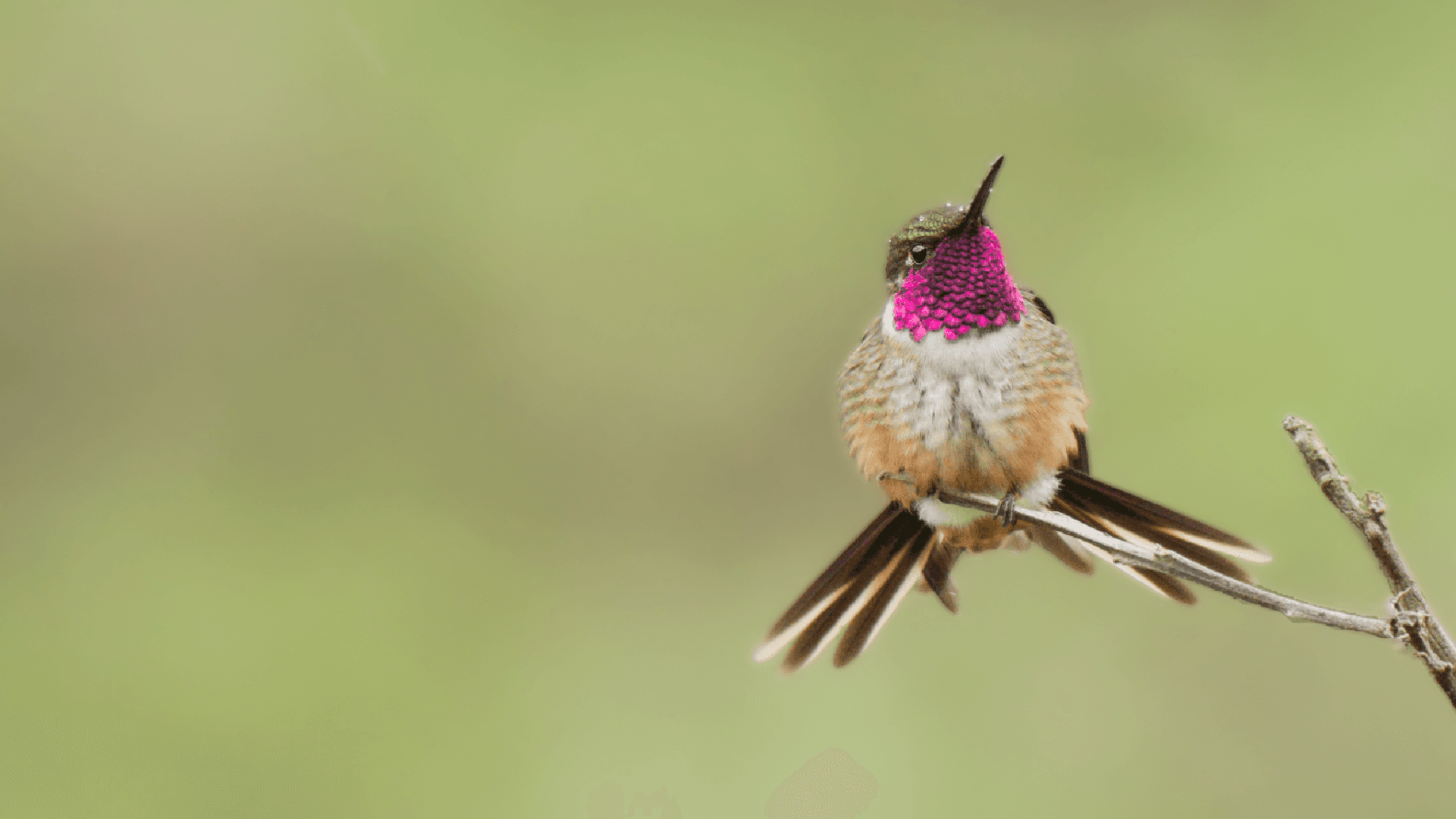
-Magenta-throated Woodstar (Philodice bryantae)
-Coppery-headed Emerald (Microchera cupreiceps) — a Costa Rican endemic
-Stripe-tailed Hummingbird (Eupherusa eximia)
-Green Hermit (Phaethornis guy)
Some lodges and birding sites maintain carefully designed hummingbird gardens where photographers can enjoy exceptional viewing conditions throughout the day.
A particularly accessible option is the Monteverde Hummingbird Gallery, located about 100 meters before the entrance to the Monteverde Cloud Forest Biological Reserve. There is no entrance fee; visitors are simply expected to purchase something at the local coffee shop, such as a coffee or cake. It can be an excellent place to enjoy close views of several hummingbird species.
Where to Go Birdwatching in Monteverde
Although the entire Monteverde region offers excellent birding, several protected areas and reserves stand out.
Monteverde Cloud Forest Biological Reserve
The region's best-known reserve is home to many of the classic cloud forest species and provides an opportunity to explore extensive protected high-elevation forest.
Curi-Cancha Reserve
Curi-Cancha is a private reserve with a network of relatively open trails. The upper part of the reserve includes cloud forest, while much of the property consists of mountain rainforest.
There is also a garden area where several hummingbird species can be easier to observe, making Curi-Cancha a particularly versatile destination for birders and photographers.
Children's Eternal Rainforest — Bajo del Tigre Sector
The Bajo del Tigre sector is located at lower elevations, below the main cloud forest. Its habitats include rainforest as well as transitional forest leading toward the drier forests of the Pacific slope.
This makes it a valuable complement to the higher-elevation reserves and a good place to look for species such as the Three-wattled Bellbird and Long-tailed Manakin.
Best Time to Visit Monteverde
Birdwatching in Monteverde is rewarding year-round, but different seasons offer different highlights.
December through April
The dry season is generally the preferred period for many visitors. It can provide more favorable conditions for spending long days in the field and is also an excellent period for looking for the Resplendent Quetzal.
March and April can be particularly rewarding for photographers interested in observing quetzals around nesting sites.
March through July
This period can offer excellent opportunities to observe displaying Three-wattled Bellbirds as males establish territories and attract females.
Because the timing and location of bird activity can vary from year to year, local knowledge can be particularly valuable when planning a birding trip during the breeding season.
Why Hiring a Local Birding Guide Makes a Difference
Monteverde's forests are incredibly rich, but they can also be challenging. Many birds remain high in the canopy, move quickly through dense vegetation, or are detected by sound long before they are seen.
Local birding guides spend countless hours monitoring fruiting trees, flowering plants, nesting cavities, favorite courtship perches, and seasonal movements.
Their knowledge can mean the difference between simply hearing a bird and actually observing or photographing it. More importantly, a good guide can help you spend your limited time in the field at the right place, at the right time, with the best possible opportunity for a clear view or a great photograph.
Whether your goal is finding a Resplendent Quetzal, photographing a Three-wattled Bellbird, discovering hummingbirds, or adding highland specialties to your life list, an experienced local guide can greatly increase your chances of success.
Experience Monteverde with BirdnWild
At BirdnWild, we connect birdwatchers and wildlife photographers with experienced local guides who know where Costa Rica's most remarkable birds can be found — and how to find them at the right time.
Whether you're planning your first visit to Monteverde or searching for a specific target species, our local experts can help you make the most of every day in the field.
Explore our Monteverde birdwatching tours and discover why this legendary cloud forest remains one of the finest birding destinations in Costa Rica and Central America.
Find Birdwatching Tours in Monteverde
Find Bird & Wildlife Tours in Monteverde
Happy Birding!