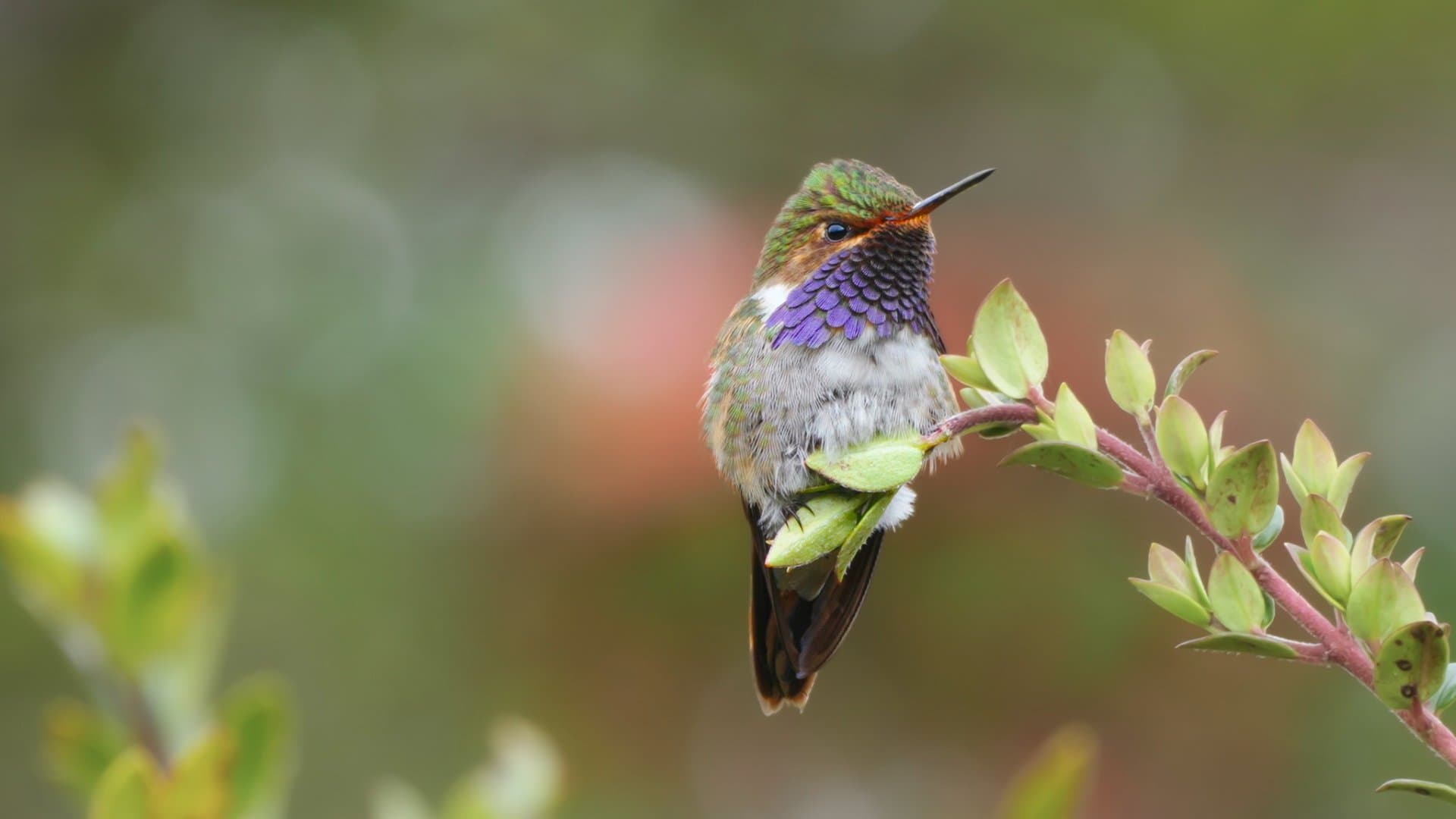
The Talamanca Mountains are one of the most exciting destinations for birdwatching in Costa Rica. Rising to more than 3,000 meters (9,800 feet), this mountain range contains a remarkable variety of tropical mountain habitats, from cool montane forests and cloud forests to the high-elevation páramo above the treeline.
These ecosystems are home to an exceptional collection of highland birds, including the iconic Resplendent Quetzal and many other range-restricted species found in the highlands of Costa Rica and western Panama.
The Range-Restricted Bird Species of the Talamanca Mountains
The Talamanca range is effectively an evolutionary island.
Its high elevations and geographic isolation have created conditions in which bird populations have evolved independently from those in the surrounding lowlands. As a result, these mountains are home to more than 40 range-restricted bird species.
The habitats also change dramatically with elevation, and each zone has its own distinctive bird community. The table below highlights some of the range-restricted species associated with different habitats in the Talamanca Mountains.
| Species | Montane Forest & Cloud Forest (2,000–3,000 m) |
Dense Understory (including Chusquea bamboo) |
Páramo (above 3,000 m) |
|---|---|---|---|
| Black Guan | X | ||
| Bare-shanked Screech-Owl | X | ||
| Costa Rican Pygmy-Owl | X | ||
| Dusky Nightjar | X | ||
| Talamanca Hummingbird | X | ||
| Fiery-throated Hummingbird | X | ||
| White-throated Mountain-gem | X | ||
| Volcano Hummingbird | X | X | |
| Scintillant Hummingbird | X | ||
| Buff-fronted Wood-Quail | X | X | |
| Sulphur-winged Parakeet | X | ||
| Resplendent Quetzal (southern subspecies) | X | ||
| Prong-billed Barbet | X | ||
| Southern Spot-crowned Woodcreeper | X | ||
| Ruddy Treerunner | X | ||
| Buffy Tuftedcheek | X | ||
| Silvery-fronted Tapaculo | X | ||
| Ochraceous Pewee | X | ||
| Dark Pewee | X | ||
| Black-capped Flycatcher | X | ||
| Silvery-throated Jay | X | ||
| Black-billed Nightingale-Thrush | X | X | X |
| Black-faced Solitaire | X | ||
| Sooty Thrush | X | ||
| Black-and-yellow Silky-flycatcher | X | X | |
| Long-tailed Silky-flycatcher | X | ||
| Ochraceous Wren | X | ||
| Timberline Wren | X | X | |
| Yellow-winged Vireo | X | ||
| Flame-throated Warbler | X | X | |
| Collared Redstart | X | ||
| Black-cheeked Warbler | X | ||
| Wrenthrush | X | ||
| Spangle-cheeked Tanager | X | ||
| Slaty Flowerpiercer | X | X | |
| Peg-billed Finch | X | X | |
| Yellow-thighed Brushfinch | X | ||
| Large-footed Finch | X | X | |
| Sooty-capped Chlorospingus | X | X | |
| Volcano Junco | X | ||
| Golden-browed Chlorophonia | X |
Resplendent Quetzal: One of Costa Rica's Most Iconic Birds
The Resplendent Quetzal is one of the main attractions for birdwatchers and wildlife lovers visiting the Talamanca Mountains, although it can also be seen in several other areas of Costa Rica.
With its brilliant green plumage, red belly, and extraordinarily long tail coverts in males, it is one of the most spectacular birds in Central America.
But finding a quetzal is not simply a matter of walking into the forest and hoping for one to appear.
Quetzals are closely associated with fruiting trees, particularly wild relatives of avocado in the Lauraceae family. Their movements can therefore be influenced by the availability of food.
In some communities, local farmers and guides have developed conservation initiatives that protect quetzal habitat while also creating opportunities for birdwatching and photography.
For photographers, these initiatives can provide excellent opportunities to observe and photograph these spectacular birds without putting unnecessary pressure on them. They are a wonderful example of an approach that can benefit both wildlife and the local economy.
A Paradise for Hummingbirds
The Talamanca Mountains are also exceptional for hummingbird enthusiasts.
Among the many hummingbird species that can be found here, five are range-restricted to these highlands:
- Fiery-throated Hummingbird
- Talamanca Hummingbird
- White-throated Mountain-gem
- Volcano Hummingbird
- Scintillant Hummingbird
The local subspecies of the White-throated Mountain-gem is particularly interesting. It is sometimes treated as a separate species, the Gray-tailed Mountain-gem, and is endemic to Costa Rica.
Hummingbirds can often be found around flowering plants, forest edges, gardens, and other areas where nectar resources are abundant. Some highland lodges and private gardens have become particularly productive places for observing and photographing them.
Above the Treeline: Birding the Páramo
As you climb higher into the Talamanca range, the forest eventually gives way to an entirely different ecosystem.
Above the treeline lies the páramo, a high-elevation habitat characterized by low-growing vegetation, shrubs, grasses, and exposed rocks. Conditions can be harsh, with strong winds, low temperatures, and rapid changes in weather.
Two particularly interesting species that have adapted to life in this ecosystem are the Timberline Wren and Volcano Junco. These birds are strongly associated with high-elevation habitats and are much less likely to be encountered in the forests below.
Where to Go Birdwatching in the Talamanca Mountains
The Talamanca range extends across a large part of southern and central Costa Rica, so there is no single place that represents the entire region.
Some of the best-known areas for highland birdwatching include San Gerardo de Dota and the Savegre Valley, Cerro de la Muerte, Los Quetzales National Park, the Siberia and Villa Mills area, and the forests above San Gerardo de Rivas and the Chirripó Valley.
The best location depends on which species you want to see.
This is one reason it can be useful to plan your birding itinerary around target species rather than simply choosing a destination based on its general reputation for birdwatching.
When Is the Best Time to Go Birdwatching in Talamanca?
The Talamanca Mountains can be visited for birdwatching throughout the year.
However, weather and food availability can influence bird activity and the overall birding experience at different elevations.
The dry season, generally from December through April, is often more comfortable for exploring mountain trails, particularly at higher elevations. The months of February through April can also be particularly interesting for observing and photographing some species, such as the Resplendent Quetzal, during the breeding season.
That said, you can definitely visit this area during the rainy season as well. Accommodation prices tend to be lower, and there are generally fewer tourists around. The forests are also particularly lush during this time of year.
Why Hire a Local Birding Guide in the Talamanca Mountains?
The Talamanca Mountains are rich in birds, but finding some of their most sought-after species can be challenging.
Mountain forests can be dense, and some species have very specific habitat or food requirements. Weather can also change rapidly, particularly at higher elevations.
Local guides spend much of their time in these ecosystems and know where particular species are being seen. They can recognize calls, understand seasonal movements, identify productive fruiting or flowering trees, and choose the best locations based on what you want to see and the current conditions.
For photographers, this local knowledge can be even more valuable. Finding a bird is only the first step; understanding where it is likely to perch, feed, display, or return can make the difference between a brief sighting and a successful photographic opportunity.
Birdwatching and Conservation in the Talamanca Mountains
Birdwatching can also play an important role in conservation.
The highland communities of Costa Rica have developed a strong connection between biodiversity and tourism. When forests, wetlands, and other natural habitats attract visitors who come specifically to see wildlife, local communities can generate income from protecting those ecosystems.
The story of the Resplendent Quetzal is a good example. Protecting forest and food resources for the birds can benefit both wildlife and the communities that depend on nature-based tourism.
This is the kind of relationship BirdnWild hopes to strengthen: connecting visitors with knowledgeable local guides while helping make wildlife and its habitat more valuable alive than destroyed.
At BirdnWild, we also hope to help more communities become involved in ecotourism and conservation. In this specific case, we recommend watching the video below, “Living with Quetzals,” to learn more about one of these initiatives.
Plan Your Talamanca Birding Experience with BirdnWild
Whether your goal is to photograph a Resplendent Quetzal, search for highland hummingbirds, explore the cloud forest, or reach the páramo in search of range-restricted species, the Talamanca Mountains offer an extraordinary birdwatching experience.
A local guide can greatly increase your chances of having a successful visit, helping you find and photograph the species you are looking for while making the most of your time in the mountains.
BirdnWild connects you with local expert guides:
Explore tours in the San Gerardo de Dota and Cerro de la Muerte region:
San Gerardo de Dota & Cerro de la Muerte birding tours
Explore tours in the San Gerardo de Rivas and Chirripó Valley region:
San Gerardo de Rivas & Chirripó Valley birding tours
Browse tour options, filter by target bird species, book directly with local specialists, and support community-based conservation!