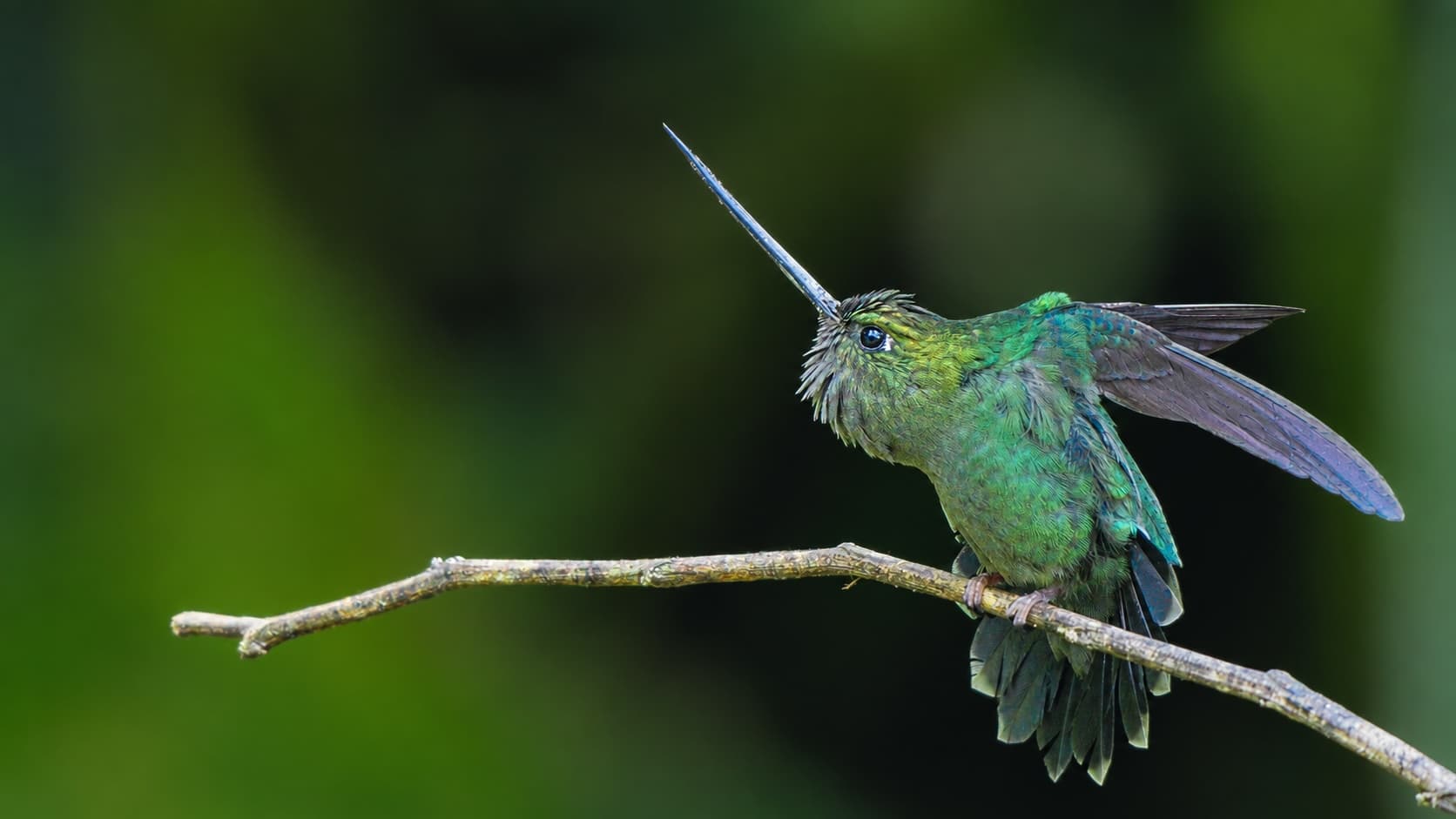
The Hummingbird That Ignore the Feeders
Hummingbirds are among the most sought-after subjects for any birdwatcher or wildlife photographer. Often described as living, flying gems, these high-energy pollinators are typically enjoyed up close in dedicated hummingbird gardens, buzzing around nectar feeders and brightly colored flowers.
However, some species follow a completely different path. They bypass open gardens, ignore artificial feeders entirely, and choose to retreat deep within the shadowed heart of pristine cloud forests and humid mountain ravines. Today, we are focusing on one of those true hidden treasures: the Green-fronted Lancebill (Doryfera ludovicae).
What Makes the Green-Fronted Lancebill So Unique?
The Green-fronted Lancebill is a shy, highly specialized forest hummingbird native to mid-elevation Neotropical cloud and mountain forests. Characterized by its glittery emerald forehead patch and dark, bronze-green plumage, its most striking feature is its extraordinarily long, needle-straight bill—accounting for nearly a third of its total body length!
Key Anatomical & Behavioral Adaptations
- Specialized Bill Morphology: Its elongated bill allows it to feed on deep, tubular flowers (such as epiphytic Ericaceae and Centropogon) that short-billed hummingbirds cannot reach.
- Insect Hawking: Unlike garden species that rely heavily on sugary feeder solutions, lancebills hunt tiny midges and spiders by hovering directly over rushing water.
- Shade-Seeking Habitat Selection: They prefer shady micro-habitats along steep, rocky ravines, fast-flowing mountain streams, and waterfalls.
Tracking Down a Shadow Hunter in the Ravine
During a recent field expedition with local conservationist and expert guide Jose, the BirdnWild team visited the mountain forest that Jose has been dedicatedly restoring for over 18 years.
"To find the Green-fronted Lancebill, you have to follow the water. They are creatures of habit, but you must know exactly which thin, hanging branches over the rushing stream they choose as their vantage point." — Jose, Local Guide
Patience along steep mountain streams reveals a beautiful behavior: stream bathing. Positioned on a slender mossy branch hovering inches above fast-moving water, the lancebill periodically drops into mid-air, hovering momentarily to catch the cool spray of the cascade before returning to its shadow perch.
Field Tips for Capturing the Perfect Lancebill Shot
Photographing specialized forest hummingbirds presents distinct technical challenges due to low understory light levels and fast bird movement. Here are a few recommendations for success:
- Look for Low-Hanging Perches over Water: Scan thin branches hanging 1 to 2 meters directly above fast-moving stream riffles.
- Master Low-Light Camera Settings: Use fast lenses (ideally f/2.8 or f/4) paired with a high-ISO camera setup.
- Respect Nesting & Roosting Zones: Lancebills construct delicate cup nests made of moss and spider silk attached to rocky overhangs or cave entrances near water. Maintain a respectful distance to minimize disturbance.
Forest Conservation and Community Ecotourism
Because the Green-fronted Lancebill relies heavily on intact forest streams and clean, unpolluted watersheds, protecting cloud forest corridors is critical for its long-term survival. When wildlife photographers partner with local landowners and specialized guides, ecotourism directly rewards communities for keeping primary forests and private reserves standing.
Experience the Magic of the Green-Fronted Lancebill with Local Guides
Ready to venture into the Neotropical cloud forest and capture your own shot of the Green-fronted Lancebill? Finding hidden forest specialists requires localized knowledge, precise timing, and trusted ground expertise.
BirdnWild makes it easy. We connect wildlife photographers and birdwatchers directly with local expert guides who know these secret forest ravines inside and out.
🌿 EXPLORE LANCEBILL TOURS: